How to Wake up Snow White Without a Prince?

When the brothers Grimm first collected the Snow White story, there was no stepmother, no huntsman, and no prince… at least not until long after the princess had returned home, safe and sound. As a boy, I had always found it “lame” that the heroin had to be saved by the kiss of a prince; later, the idea of someone kissing a girl in a coma seemed altogether wrong. I knew that Disney had borrowed that idea from another fairy tale, Briar Rose a.k.a Sleeping Beauty, where it occurs under very different circumstances, but the fact that the Grimms’ first Snow White had been saved without kiss or prince both surprised and intrigued me.
The Power of Fairy Tales
Little Sister Grimm came from my fascination with the origins and evolution of fairy tales. It is easy to forget that well-known stories like Hansel and Gretel or Cinderella came from oral storytelling traditions that went on for centuries. A recent study even traces some European fairy tales as far back as the Bronze Age, some 6000 years ago. This means that the images and plot lines of such tales have been filtered through the individual minds of generations of storytellers, becoming more and more universal over time. They deal with existential problems we may all face in life, such as jealousy, deceit, injustice, love lost or material hardship, and offer insights that may help us overcome them. According to Jungian psychologist Marie-Louise Von Franz, fairy tales use a timeless, dream-like language of archetypal images that speak directly to our subconscious mind to help us face our fears and deepest desires. For Jack Zipes, one of the world’s leading fairy tale scholars, they offer examples of ‘natural justice’ that empower us to come up with our own practical solutions in the here and now.
“As long as you’re pretty and patient
you will get your Happy Ever After…
Disney may say so,
but does that make it true?“
Though there is nothing wrong with retelling old fairy tales in a new form, something of value may be lost in the process. When Disney’s team enlisted a kissing prince to come to Snow White’s rescue in 1937, they imprinted generations of movie-goers with the idea that “true love’s kiss” will magically save the day. Life is essentially a romantic comedy, and as long as you’re pretty and patient you will get your Happy Ever After… Disney may say so, but does that make it true?
The Brothers Grimm
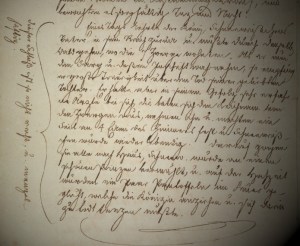
It is ironic that, at a time when European colonial governments were working hard to stamp out Indigenous cultures in the lands they occupied, the Brothers Grimm were part of a group of scholars and artists trying to save Europe’s own rapidly disappearing folk traditions. By the early nineteen hundreds, when the brothers Grimm began collecting fairy tales, oral traditions were dying out across Europe because of industrialization and changes in society. As scholars, they intended to preserve these “folk treasures” exactly as they found them, but when their collection grew more popular with each successive edition, the Grimms abandoned some of their academic scruples and “tweaked” the collection to make it more suitable to the tastes of a middle class audience and their children. They removed offensive tales, replaced overt sexual references with innocuous details, changed evil mothers into stepmothers, and added embellishments that matched their concept of the “perfect” German fairy tale. By the final edition some tales had become twice or three times as long as they had been in the first.
“How can a girl,
poisoned and paralyzed
by her mother’s jealous rage,
be brought back to life?”
Reviving Snow White
The Grimm’s Urfassung, the field notes in which they recorded fairy tales as they first heard them, reveals how different some of these tales were before the Grimms published them. Some of the stories existed in multiple variants, with different endings or beginnings depending on who told them. Often, there were overlapping elements between diverse tales, and sometimes it was not clear where one narrative ended and another began. For “Little Snow White, or the Hapless Child,” Jacob Grimm noted that the most complete version they had found had an ending that was “not right like this, and inadequate.” By the time they published their first edition, they had collected at least six variants of the tale, as well as a more satisfactory ending. For my puppet project, I wanted to go back to the earlier, less polished version of this iconic story, and to the questions raised by its “inadequate” ending. Without a Prince Charming, how does Snow White wake up? How can a girl, poisoned and paralyzed by her mother’s jealous rage, be brought back to life? I decided to leave the solution in the hands of my protagonist, the brothers Grimm’s little sister, Charlotte Grimm, Lotte to her family and friends.
Lotte, the Sister Grimm

It has been a challenge to dig for traces of Lotte’s life and personality in the mass of information that has been published about her famous brothers. In addition, the patriarchal mindset of Lotte’s era gave little opportunity for women’s voices to be heard beyond the intimate circle of family and friends. Fortunately, her brothers’ personal writings often mention their sister, and some of her own letters have survived.
“Many of Lotte’s
women friends
contributed fairy tales
to the Brothers Grimm’s
collection.”
Lotte Grimm was the only sister in a family with 5 brothers. Her father died when she was little, and when her mother also passed away Lotte, only 15 at the time, became responsible for most of the household duties, as was expected of a woman in her days. But she also read books, liked going to balls and the theatre, and participated in a weekly reading circle organized by Jacob and Wilhelm at their home. Many of her women friends contributed fairy tales to the Brothers Grimm’s collection. Lotte’s artist brother Emil Ludwig, made a few paintings and sketches of her; in one of them she is playing the guitar. Inspired by her historical counterpart, my puppet Lotte is a feisty, creative little girl with ideas of her own. Little Sister Grimm is a tribute to the power of stories and the imagination, to the women history has forgotten, and to all children everywhere who face evil or hardship.
A Few Resources
[Please note: I am in no way associated with any of the resources or websites mentioned]

Jack Zipes’ English translation of the first edition of the Grimms’ fairy tales (book)
Jack Zipes, The Brothers Grimm, from Enchanted Forests to the Modern World (book)
Valerie Paradiž, Clever Maids: The Secret History of the Grimm Fairy Tales (book)
Maria Tatar on “Why Fairy Tales Are for Adults Again” (podcast)
Extra Grimm: An Interview with Jack Zipes (podcast)
The Guardian on the prehistoric roots of certain Indo-European fairy tales (article)
Marie-Louise Von Franz on the interpretation of Fairy Tales (book)
All site content © Kris Fleerackers except where noted otherwise
 Kris Fleerackers